A revolution in the International System of Units: Physical constants take center stage.
Pöllau Castle, Great Fresco Hall, 2nd floor
Time: 5.00 pm
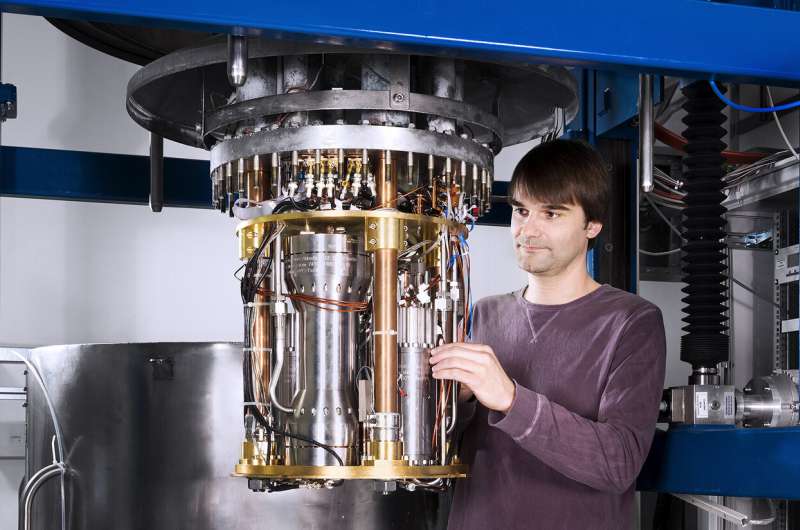
Dr. Christof Gaiser
German National Metrology Institute, Berlin, Germany
Over 100 years ago, Max Planck had a dream; he proposed basing units on fundamental constants which, as he wrote, “must necessarily retain their validity for all cultures, including extraterrestrial and non-human ones”. With the redefinition of the base units kilogram, mole, ampere and kelvin, this idea was fully realised on 20 May 2019. This presentation describes the long journey to achieve this goal and the pivotal role played by the great Austrian physicist Ludwig Boltzmann, as well as the experiments required to determine the fundamental constants.
Public lecture, followed by the opening of the newly established SI Room at the Echophysics Museum.
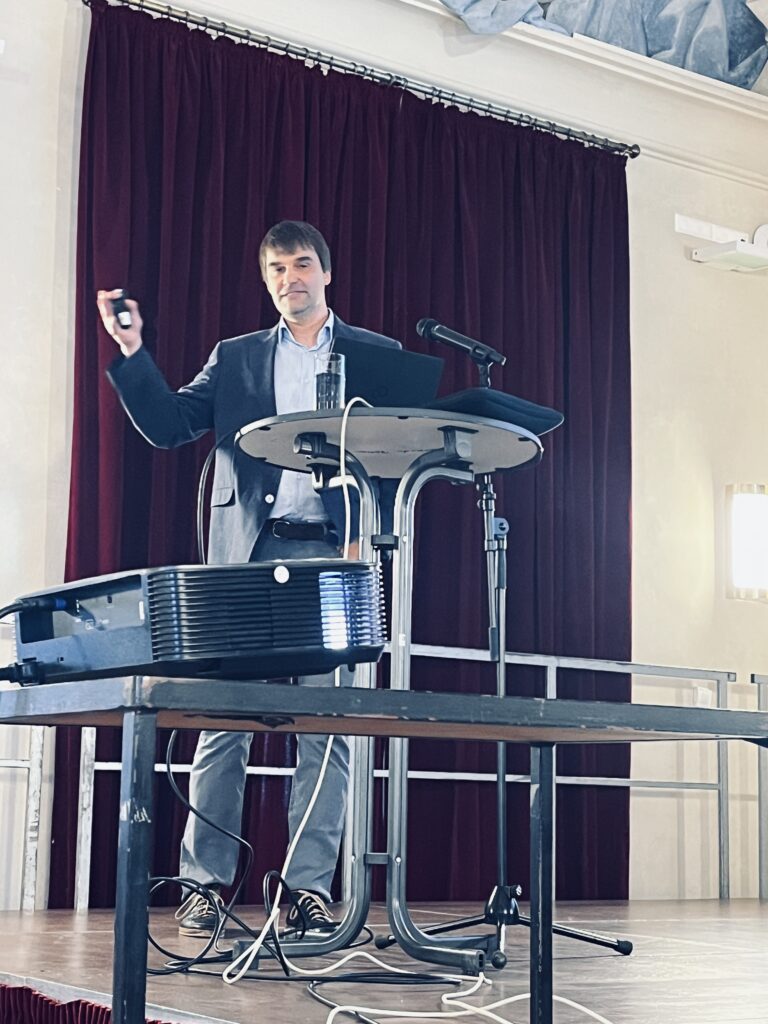
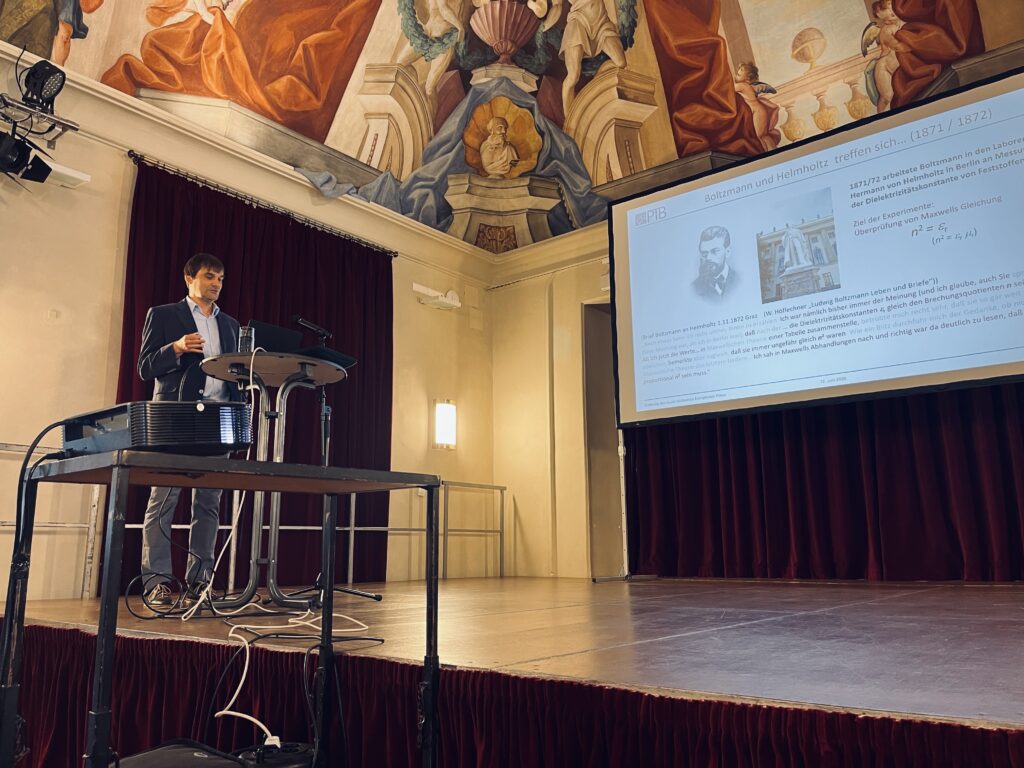
Due to the high interest we ask for reservation:
https://reservation.ticketleo.com/event/35883/dr-christof-gaiser-revolution-im-einheitensystem
The International System of Units (SI), established in 1960, is the most widely used system of physical units worldwide. It is based on seven base units (metre, kilogram, second, ampere, kelvin, mole, candela), which utilise precise, unchanging physical constants to standardise measurements in science, industry and everyday life.